

July 7, 2025
by Dr Walid Phares
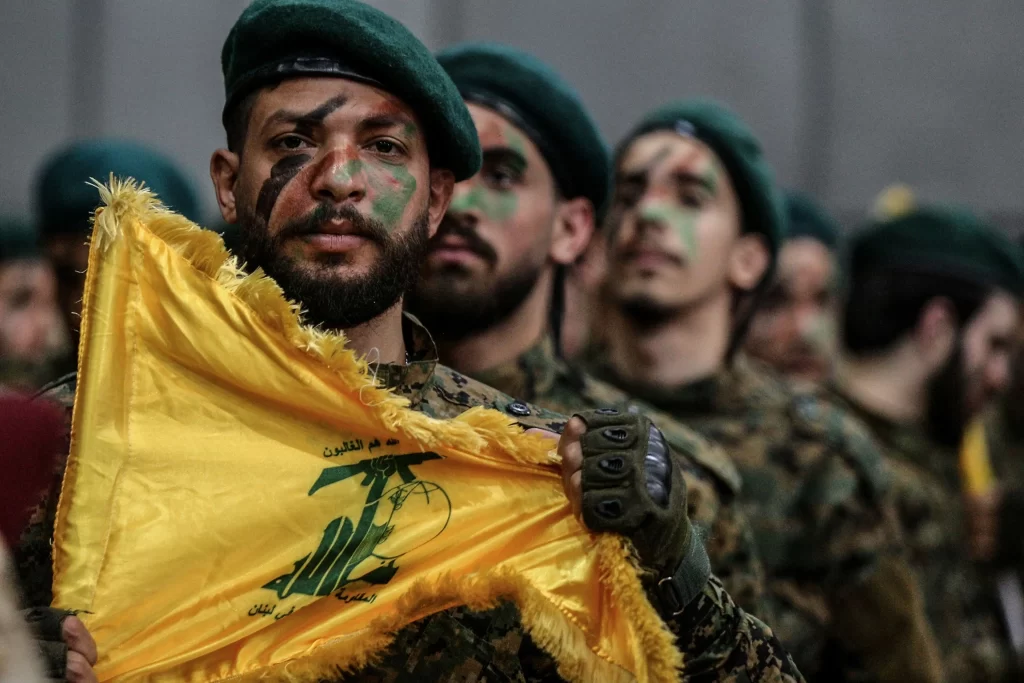
For over two decades—since the passage of UN Security Council Resolution 1559 in September 2004—my team and I have been advising various branches of the U.S. Government on strategies to disarm Hezbollah. Yet despite the resolution and continuous efforts, nothing substantive has been achieved. The river of history has flowed far past the bridge of good intentions, and Hezbollah remains armed and entrenched.
Why? Here are five key reasons:
1. Lebanon’s Leadership is Subordinated to Hezbollah
Since its 2006 war with Israel and mostly after its military coup against a duly elected Government on May 7, 2008, Hezbollah has held an intimidating grip over Lebanon’s political apparatus. The Lebanese state, fearing assassinations and violence, has avoided confronting the militia. Today, even when some officials cautiously express a desire to remove Hezbollah’s heavy weapons, they immediately add: “in agreement with Hezbollah.” This is a clear signal that Lebanon’s leadership remains unwilling—or unable—to disarm the militia by force or through independent initiative.
2. Fear Overrides Sovereignty
Non-Hezbollah-affiliated Lebanese officials are paralyzed by fear of violent retaliation. They will not dare initiate military action in Hezbollah-controlled areas unless the group is first weakened—preferably by U.S. or Israeli action. This self-defeating calculus leaves Lebanon in a strategic stalemate.
3. Hezbollah Will Not Disarm Itself
Hezbollah may entertain cosmetic agreements allowing the Lebanese Army to be present in its zones of control, but these would be symbolic at best. As long as the Islamic regime in Iran stands, Hezbollah—its armed wing in Lebanon—will not voluntarily dissolve.
4. Israel’s Military Victories, Strategic Limits
Israel has severely degraded Hezbollah’s long-range missile capabilities and eliminated many of its senior commanders. Hezbollah, now cautious, avoids initiating a large-scale war for fear of losing what remains of its military edge—and domestic support. The December jihadi coup in Syria against dictator Bashar Assad by HTS has further disrupted Iran’s supply lines to Hezbollah via Iraq. Though Israel controls Lebanon’s airspace and maritime access and continues to strike Hezbollah targets, air campaigns alone cannot disarm the militia. Only a ground operation could accomplish that. But here lies the paradox: Israel expects the Lebanese state to take responsibility for dismantling Hezbollah, while Lebanese officials wait for Israeli or U.S. action first.
5. The U.S. Pushes, but Lebanon Hesitates
American diplomats and envoys have repeatedly pressed Lebanon’s President, Prime Minister, and Speaker of Parliament to implement a phased plan to disarm Hezbollah. I personally presented such a plan during the first Trump administration, and again in 2022 to members of Congress. Most recently, Deputy Envoy Morgan Ortagus and Ambassador Tom Barrack have urged the Lebanese government to begin the process. To its credit, the Trump administration is officially calling for the end of Hezbollah’s military power. However, Lebanese officials continue to maneuver diplomatically, waiting to hide behind Washington’s lead rather than act proactively. They fear Hezbollah more than they trust U.S. support—because the militia sits just beneath their balconies.
6. An Alignment of Forces
What is needed for Hezbollah’s disarmament is nothing short of an alignment of strategic forces—a geopolitical “alignment of planets”—and considerable strategic patience. The U.S. administration must adopt a sophisticated understanding of Lebanon’s complex realities. It can no longer treat Lebanon as a fully sovereign and independent state; rather, it must acknowledge that the country is partially free and partially occupied by a Khomeinist militia force.
The U.S. should commit to helping Lebanon free itself from Hezbollah by all available means—but crucially, Lebanon’s political leadership must stop evading Washington’s calls for action and instead formally request such support. The anti-Hezbollah political factions in Lebanon must unite and openly appeal to the international community and the UN Security Council for the full implementation of UNSCR 1559, which has called for the disarmament of all militias since 2004. The Lebanese majority must lead from the front—not follow from behind—in any serious effort to dismantle Hezbollah’s military power.
At the same time, Israel should continue its close coordination with the United States, and work alongside willing partners in the Arab Coalition to prepare for a post-Hezbollah Lebanon. A truly free Lebanese Republic—once liberated from Hezbollah and other jihadist factions—should be positioned to join the Abraham Accords and contribute to a new era of regional stability and cooperation.
A Call for Strategic Rethinking
I strongly recommend that the Trump administration establish a special task force on Lebanon to re-evaluate and develop an alternative U.S. policy. Such a strategy must reflect today’s realities—particularly the post-collapse of Iran’s nuclear program—and should be grounded in practical options that neither rely on the Lebanese government’s initiative nor assume Hezbollah will ever voluntarily disarm.
________
Dr Walid Phares is a former foreign policy advisor to Donald Trump, AMCD senior advisor and the author of Iran and Imperialist Republic.
One response to “The Saga of Disarming Hezbollah”
This is excellent. One of the best analysis on that topic for the moment.