
July 14, 2025
by Dr Walid Phares
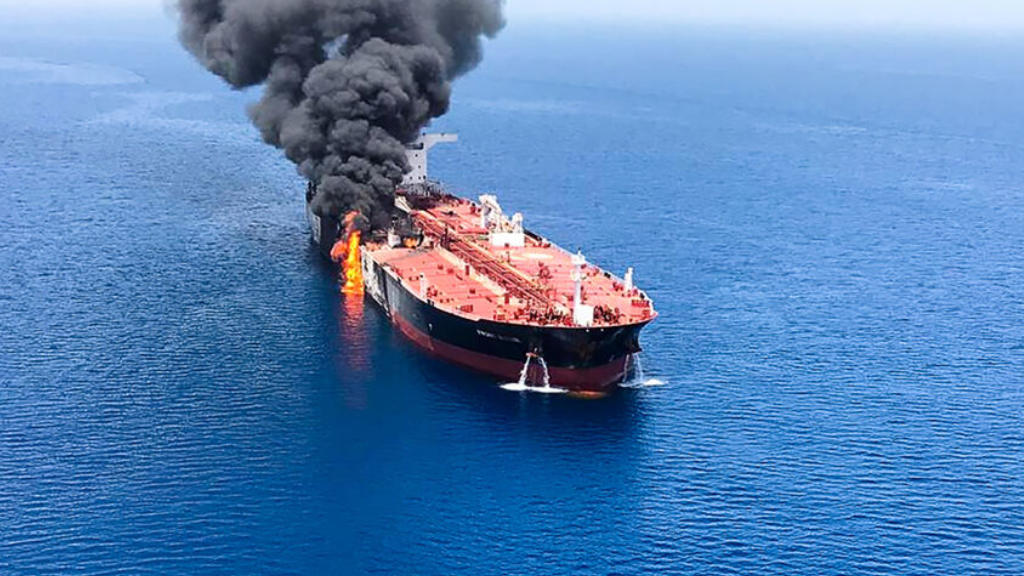
The central problem with U.S. and Western policies regarding the persistent Houthi threat to international shipping in the southern Red Sea and the Arabian Sea lies in a fundamental lack of strategic clarity. What is the actual objective of the international coalition?
Is the goal to open dialogue with the Houthis and recognize them as a legitimate part of the Yemeni government, as was the approach under both the Obama and Biden administrations? Or is the aim to apply limited pressure to deter the Houthis from targeting key maritime routes such as Bab el-Mandeb, while otherwise preserving the status quo? Or perhaps—since the most recent ceasefire—the strategy is to maintain pressure while simultaneously initiating negotiations to reach some sort of “deal.”
Whichever of these scenarios is in play, they all seem to point toward a broader objective: a larger diplomatic agreement with the Islamic regime in Iran. Tehran, through its IRGC command structure, directs Houthi drone and missile attacks on shipping in the Red Sea. The implicit message seems to be: Cut a deal with us, and we can rein in the Houthis (as well as Hezbollah in Lebanon and the Hashd al-Shaabi in Iraq). It appears that U.S. and Western strategies are once again orbiting around this logic.
However, a fundamentally different strategic option was adopted by Saudi Arabia and its Arab and Muslim coalition a decade ago: defeat the Houthis outright and help establish a normal, peaceful government in Yemen. That path was opposed by both the Obama and Biden administrations, who instead pressured Riyadh and Abu Dhabi to halt their military campaign against the Houthis—a catastrophic miscalculation that prolonged the war.
During its first term, the Trump administration took a different course, supporting the Saudi-led Arab coalition and encouraging them to “drive out the terrorists” (as highlighted in the Riyadh speech of May 2017). But domestic opposition in the U.S.—still influenced by Obama-era policies—undermined Trump’s strategy in Yemen, even as his administration made major gains elsewhere: exiting the Iran Deal, designating the IRGC as a terrorist organization, and eliminating Qassem Soleimani.
The Biden administration reversed those policies. It reinstated funding to Iran and, in its first week in office in 2021, delisted the Houthis as a terrorist organization. When the second Trump administration returned, it initially allowed Israel to retaliate against Houthi missile attacks and launched U.S. strikes in response. However, only weeks ago, the administration announced new talks with the Houthis—parallel to negotiations with Hamas and the regime in Tehran. In my view, Iran is simply buying time to rearm and resume its regional expansion.
Given this reality, I have proposed a Plan B should these talks fail. That plan is to reassemble a ground force comprised of units loyal to the legitimate Yemeni government (now in exile in Aden), and—crucially—the Southern Transitional Council (STC), whose forces are based in the Aden region and maintain frontlines adjacent to Houthi-controlled territory. Notably, STC forces have achieved the most significant victories against the Khomeinist militias in past years.
The United States should back, fund, and train these southern forces for renewed ground operations along the Red Sea coast, particularly to retake the vital port city of Hodeidah. Simultaneously, northern units loyal to the Yemeni government could advance toward the capital, Sanaa. Allied airpower would provide the necessary cover to enable a southern-northern pincer movement that could collapse the Houthi hold on Yemen and eliminate the threat entirely.
This would pave the way for future negotiations—not with Tehran’s proxies—but with a federated, pro-Western Yemeni government independent of Iranian influence. That is the unavoidable Option B the West must now consider.
_________
Dr Walid Phares is the author of Iran an Imperialist Republic and US Policy, a former foreign policy advisor to President Donald Trump and the senior advisor to AMCD