
Will Sunni Extremism end along with Shia Extremism?
Will Bin Salman Raise the Banner of Peace Again?
Will Erdogan Abandon the Ottoman Dream?
Will Qatar’s Political Role end?
By Colonel Charbel Barakat | February 11, 2026
It appears that the sun of the “New Middle East” is preparing to rise. Will Sunni extremism collapse simultaneously with the end of Shia extremism? Will Crown Prince Mohammed bin Salman once again carry the banner of peace, free from the threat of Wahhabi remnants in his own backyard? Will Erdogan renounce his neo-Ottoman ambitions, leading to a diminished political role for Qatar? Can the hope for stability and a prosperous future finally stir our dreams, allowing us to envision grand cross-border projects that pave the way for progress and development in the Middle East?
The Middle East and the world at large are anxiously awaiting the results of the Oman negotiations. These talks represent yet another attempt to spare the Iranian regime the humiliation of total surrender by offering the Mullahs one final chance to bear the consequences of their long history of manipulation and the arrogance that has defined their rule. Their project was built on “exporting the revolution,” activating loyalist factions in neighboring countries, and mobilizing them according to the requirements of the imperial policy managed by the Vali-e Faqih (Supreme Leader) from his stronghold in Tehran.
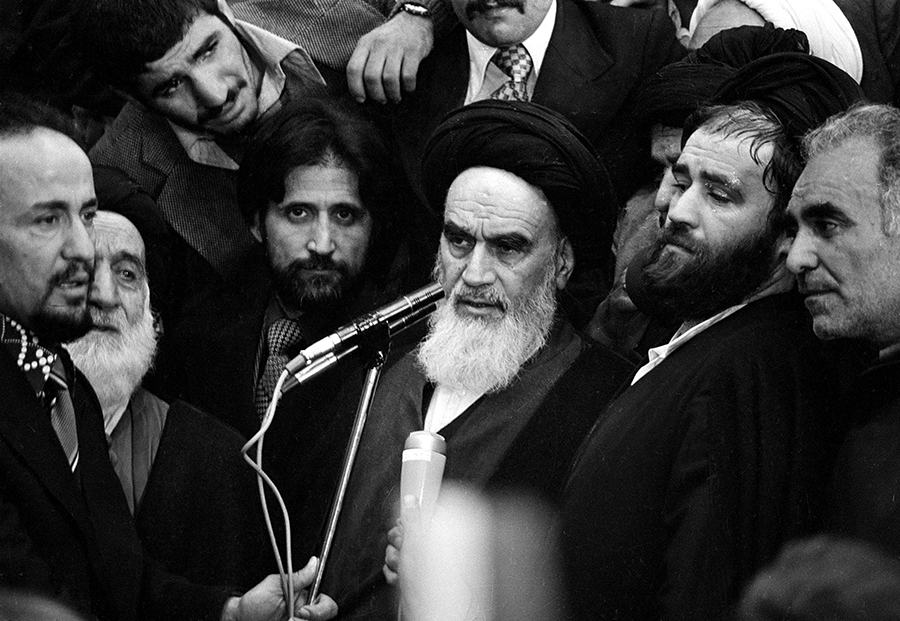
Since the era of Imam Khomeini and his successor Khamenei, the policy of the Mullahs’ regime has focused on imposing control through religious dependency. This Shia fundamentalism stood in opposition to Sunni fundamentalism—ranging from Wahhabi Salafism, which birthed Al-Qaeda in Afghanistan, to the Ottoman-leaning and Egypt-born Muslim Brotherhood. The latter inherited Al-Qaeda’s legacy through the alliance of Bin Laden and Al-Zawahiri, eventually producing “Al-Qaeda in Iraq,” which replaced the remnants of the Ba’ath party and the Iraqi army, eventually evolving into ISIS and its affiliates. The Iranians encouraged Al-Qaeda’s operations in Iraq to exhaust American forces and inflict heavy losses, thereby securing their own control over the country via Shia militias, later consolidated under the “Popular Mobilization Forces” (PMF) and legalized as part of the armed forces.
A similar policy was launched in Lebanon in 1983, following the bombings of the U.S. Embassy in Beirut and the headquarters of the U.S. Marines and French paratroopers. This led to the creation of Hezbollah, which became the backbone of Iranian terrorism in the region in terms of training and equipment, centered on absolute loyalty to the Supreme Leader. Its primary media face, Hassan Nasrallah, championed a rhetoric of hostility toward the West and the “Zionist entity.” The core strategy involved the Iranian regime’s control over ideology, leadership, and organization, attempting to topple neighboring regimes and dominate regional wealth to fund a vast, independent armament project. This was intended to culminate in military nuclear capability, granting the Supreme Leader the absolute power to ensure the success of the “Hidden Imam” in controlling the world upon his return.
However, the “Great Satan” and the “Little Satan” were lying in wait. Last June, Israeli aircraft conducted concentrated strikes over 12 consecutive days against numerous critical targets. This was followed by American strikes on three of Iran’s most advanced nuclear reactors to halt enrichment after Tehran refused to comply with U.S. conditions during the first round of Oman talks.
Today, following President Trump’s declaration of his intent to rid Iran of its “evils,” the regime has scrambled to request mediation from Turkey, Saudi Arabia, and other nations to halt military operations and negotiate to spare the region the ravages of war and the potential indiscriminate retaliation of the Revolutionary Guard (IRGC). But what of the regime’s actions within Iran? How did it treat protesters and its own people as soon as the threat of external military action paused?
The Iranian opposition reports that the death toll during the suppression of protests—previously leaked to be over 12,000—is rising daily. Some sources suggest it has exceeded 40,000. Furthermore, with the ongoing hunt for suspects and raids on hospitals to kill those believed to have been wounded in the protests, the number may surpass 60,000. These are figures that cannot be ignored once international communications and the internet are fully restored. Can the regime regain control of the streets once more?
Undoubtedly, the United States continues to amass military assets, finalize combat plans, and gather intelligence on the regime’s maneuvers to justify its final removal. This may not require more than striking the headquarters of the IRGC, its leadership, and Basij centers. Such a move could flip the situation, prompting the oppressed Iranian people to overthrow their executioners and take revenge for the regime’s shameful acts and the theft of the nation’s wealth.
The Iranian opposition abroad, which appears increasingly organized and is gaining trust within international circles concerned with the country’s future, believes it can manage the transition. While purging the regime’s evils won’t be a simple “surgical operation”—and acts of revenge are inevitable given the unprecedented oppression the people have endured—the process will not be left to chance. The international community, led by the U.S., is closely monitoring the situation, as evidenced by the Israeli Prime Minister’s urgent visit to Washington today.
But what about the other regions controlled by Iran’s proxies? Will we witness retaliations and a purging of the Mullahs’ remnants in Lebanon, Iraq, Yemen, and perhaps Gaza? These are nations still grappling with armed groups that openly declare their allegiance to the Iranian regime.
In Lebanon, the state’s move to collect Hezbollah’s weapons and assert control through the Lebanese Army might prevent some excesses. However, Hezbollah has never missed an opportunity to display its subservience to Tehran and has rejected all solutions to reintegrate into the national fabric. Therefore, the government must quickly purge the army and other security forces of Hezbollah loyalists before the Iranian regime falls, to prevent internal chaos and institutional collapse. Some analysts believe that Israeli intervention might actually serve the Lebanese state’s interest by stabilizing the situation and preventing a slide into revenge, perhaps under the pretext of securing Hezbollah’s weapons depots. A preemptive deployment of IDF units could help maintain order and prevent divisions within state forces.
In Iraq, harsh days seem to be on the horizon. The organizations the Iranian regime imposed on the government cannot survive. The withdrawal of American forces may carry significant implications in this regard. Iraqis must preemptively find solutions to deep-seated grievances and stabilize the country before the “Mullah groups” resort to chaos once they find themselves without orders from Tehran. As for the Houthis, they will likely be left to their fate once Iranian commands cease; their drones and long-range missiles will be of little use then. Finally, Hamas must capitalize on President Trump’s proposals and move quickly to surrender its weapons before the Iranian regime collapses, or else face humiliating terms that no one will dare intervene to soften.
It seems the sun of the New Middle East is indeed preparing to rise. Will we see the simultaneous end of Sunni and Shia extremism? Will a new era of stability and progress finally allow our grandest dreams to cross borders and flourish?