
February 27, 2026
BY SAL SAYGIN SIMSEK
Iran’s political rhetoric “Death to America” chant became widespread during the 1979 Iranian Revolution when massive protests overthrew the U.S.-backed monarchy of Mohammad Reza Pahlavi. Protesters used chants like “Death to America” and “Death to the Shah” as expressions of anger against U.S. influence in Iran’s politics. After revolutionary students seized the U.S. Embassy in Tehran on November 4, 1979, the chant became closely tied to the 444-day hostage crisis during which Iranian crowds repeatedly voiced “Death to America” at protests around the embassy. Since the revolution, the slogan has been institutionalized by the Iranian state: chanted on anniversaries, at Friday prayers (jumu‘ah), in rallies, and sometimes portrayed in state-sanctioned murals and public messaging.
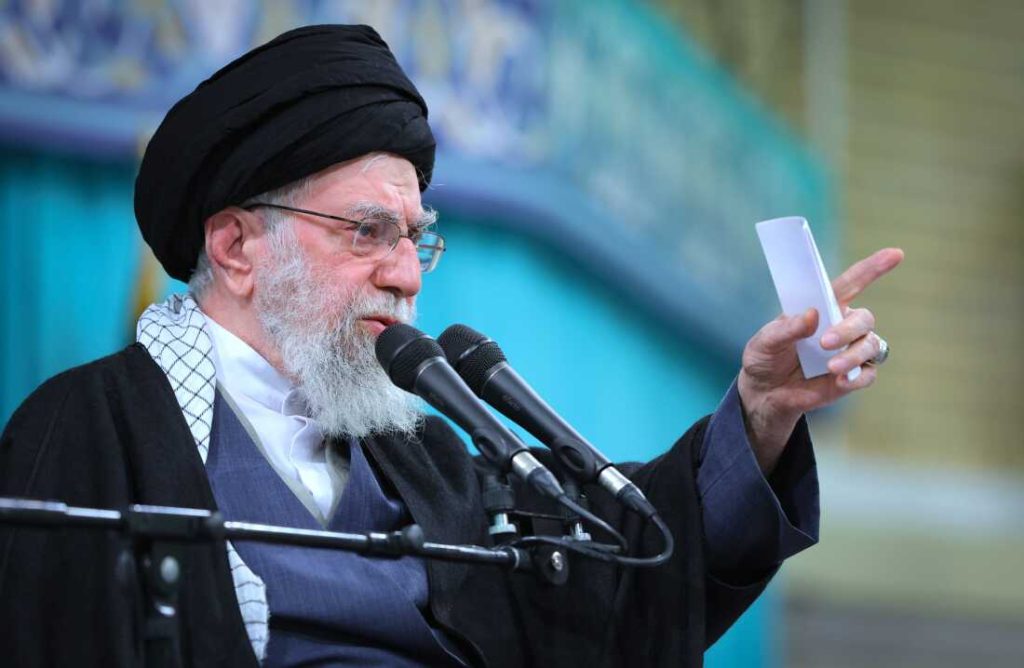
In Persian, Marg bar literally means “death to,” but many Iranian linguists and observers note this phrase is used idiomatically in political chants (like “Down with America”), similar to how powerful insults are used in other cultures. Iranian leaders, including Supreme Leader Ayatollah Ali Khamenei, have repeatedly said the slogan is not intended as a literal wish for Americans’ deaths, but rather as hostility toward U.S. policies, interference, and what Tehran labels “arrogance.” Scholars note the chant expresses anti-imperial sentiment rooted in historical grievances: opposition to the 1953 CIA-backed coup, support for the Shah, later U.S. sanctions, and intervention in the Middle East.
Though most associated with Iran, similar slogans have been used by allied groups and movements in the Middle East, such as Hezbollah and some Iraqi militias, reflecting broader anti-American sentiment tied to U.S. military actions in the region. The chant still appears at official commemorations and protests in Iran, such as anniversaries of the embassy takeover and other state-organized events; it sometimes resurfaces in times of heightened tensions with the U.S. or Israel. Iranian opponents of the regime sometimes deliberately reject or mock the slogan as part of wider protests against the government. Contemporary antigovernment protesters more often chant slogans like “Death to Khamenei” or “Death to the Dictator” to express discontent with Tehran’s leadership.
Iran has been taking hostile actions, interventions, and activities against the United States and U.S. interests. The U.S. and Iran broke formal diplomatic relations after Iranian revolutionaries seized the U.S. Embassy in Tehran in 1979, taking 52 American diplomats and citizens hostage for 444 days — a foundational moment of animosity. Since the revolution, the U.S. has designated Iran a State Sponsor of Terrorism and, in recent years, has specifically designated the Islamic Revolutionary Guard Corps (IRGC) and associated entities as Foreign Terrorist Organizations (FTOs) for alleged involvement in external attacks and financing militant proxies that have targeted U.S. forces and interests.
Rather than engaging directly with U.S. forces, Iran has often acted indirectly through proxy militias and allied groups throughout the Middle East. Iran-backed militias have repeatedly launched rockets, drones, and missiles at U.S. bases in Iraq and Syria, especially between 2019–2021, causing injuries to U.S. personnel and prompting U.S. retaliatory strikes. Groups supported by Iran have attacked or threatened U.S. embassies, including assaults on the U.S. Embassy in Baghdad following U.S. airstrikes. The U.S. has identified several Iran-aligned militias, including Harakat al-Nujaba and Kata’ib Sayyid al-Shuhada, as terrorist organizations for attacks on U.S. forces and diplomatic security. Iran’s support for allied groups like Hezbollah has historically translated into hostility toward U.S. interests, including attacks and threats in Lebanon and beyond.
U.S. authorities have linked Iranian actors, including individuals tied to IRGC and state intelligence, to cyber operations and espionage that targeted U.S. infrastructure and institutions, including alleged hacking of universities, government agencies, businesses, and attempts to surveil or intimidate dissidents abroad. The U.S. Justice Department has also reported indictments related to Iranian plots involving surveillance, intimidation campaigns, and potential violent plots against Iranian dissidents on U.S. soil or abroad.
Iranian patrol boats and naval units have repeatedly engaged U.S. naval forces in strategic waterways such as the Strait of Hormuz and Gulf of Oman, including aggressive maneuvers near U.S. and allied ships that raised the risk of escalation. In February 2026, for example, Iran conducted live-fire drills in the strategic Strait of Hormuz, even temporarily closing the waterway, a move Washington viewed as a show of force in response to U.S. pressure.
Iran’s broader strategy for countering U.S. influence involves arms transfers, training, and influence operations through militia networks. Tehran has actively built a regional proxy network by supplying weapons, funding, and logistics to groups in Iraq, Lebanon, Yemen, and Syria which are often heightening conflict in areas where U.S. troops or interests are present. These groups, while often independent, have carried out attacks on U.S. forces, diplomatic missions, and coalition partners in ways U.S. officials judge to benefit Iranian strategic goals or retaliate for U.S. actions.
Iran’s pursuit of ballistic missiles and a potentially nuclear-capable program is viewed by Washington as a threat to U.S. national security and it has driven repeated confrontations. U.S. leaders have publicly accused Iran of resuming or accelerating nuclear weapons efforts and long-range missile development, leading to military buildups and new sanctions. Sanctions and diplomatic stalemates over Iran’s missile and nuclear programs continue to fuel mutual hostility, with Iran asserting its right to civilian nuclear technology and rejecting restrictions on missile development. Iran’s nuclear program concerns US officials because Iran has enriched uranium to levels close to weapons-grade, Iran has limited IAEA monitoring access at times, and Iran has advanced centrifuge technology that shortens “breakout time” (time needed to produce enough fissile material for a bomb). Iran is a risk of a nuclear-armed adversary. Iran and the U.S. have been adversaries since 1979.
U.S. officials argue that if Iran acquires nuclear weapons, it could deter U.S. military action in the region, it could directly threaten U.S. forces stationed in the Middle East, and it could fundamentally shift the regional balance of power. The U.S. has tens of thousands of troops in the Gulf region, Iraq, and surrounding areas. U.S. leaders argue that Iran’s ballistic missile program could pair with nuclear capability, Iran has supported regional proxy groups hostile to Israel and Gulf states, and a nuclear umbrella might embolden Iran’s regional activities. If Iran builds a bomb, Saudi Arabia has indicated it would likely pursue one, Turkey and Egypt could reconsider their non-nuclear status, and the Middle East could become a multi-nuclear region. More nuclear states can lead to higher risk of miscalculation or accidental nuclear war. U.S. officials argue that if breakout time shrinks to weeks, it limits diplomatic options and increases crisis instability.
Iran has taken repressive and coercive actions toward its own citizens over the years. Security forces violently suppressed student demonstrations calling for press freedoms and reform. Arrests and prison sentences followed at 1999 Student Protests. After disputed presidential election results under Mahmoud Ahmadinejad, millions protested at 2009 Green Movement. Iranian Authorities used live ammunition and mass arrests, placed opposition leaders under long-term house arrest, and restricted media coverage. Human rights groups documented deaths, torture allegations, and forced confessions. Iranian Authorities shut down nationwide internet access for nearly a week and used lethal force at 2019 Fuel Price Protests. Amnesty International estimated hundreds were killed. Protests erupted after the death of Mahsa Amini following detention by the morality police at 2022-2023 “Women, Life, Freedom” Protests. Iranian Authorities arrested thousands; used live ammunition, pellet guns, and tear gas; carried out executions tied to protest-related charges along with intensified surveillance and dress-code enforcement. A UN fact-finding mission concluded serious human rights violations occurred.
Starting on 28 December 2025, nationwide demonstrations broke out across Iran which is originally triggered by skyrocketing inflation, a collapsed currency, and deep economic hardship. The unrest quickly grew beyond economic grievances into broad political protest, with demonstrators calling for systemic change and loudly criticizing the Islamic Republic’s leadership. Protests spread to many cities and provinces, involving a diverse cross-section of Iranian society: bazaar merchants, students, workers, and residents from urban and rural areas. Slogans expanded from economic demands to direct anti-regime chants, including calls against Supreme Leader Ali Khamenei and support for figures like Reza Pahlavi, signaling broader political aspirations. Security forces responded with brutal force. Mines and live ammunition were used in multiple cities during early January 2026, including reported killings in places like Rasht and Fardis. Mass casualty estimates vary, but independent groups and rights monitors indicate thousands of deaths and hundreds of thousands of injuries in the deadliest unrest since Iran’s 1979 Islamic Revolution. Authorities imposed a nationwide internet shutdown beginning around 8 January 2026 which is a common tactic to restrict communication and suppress documentation of the crackdown. Reports describe security forces targeting medical workers and interfering with patient care, while armed militia and police were deployed to crush student protests on university campuses. Iranian courts have handed down death sentences to protesters, including on charges like “enmity against God,” raising alarm from the UN High Commissioner for Human Rights about possible executions tied to political dissent. Unlike many earlier waves of unrest, the 2025-26 protests involve broad political demands that go beyond specific issues (like hijab enforcement) to include calls for systemic and potentially regime-level change. This wave is generally considered bigger and broader than the “Woman, Life, Freedom” movement launched after the death of Mahsa Amini in 2022, which itself was the most widespread challenge Iran had seen in decades. Earlier movements like the Green Movement (2009), fuel price protests (2019), and Mahsa Amini protests (2022–2023) each had significant impact, but none engaged such diverse segments of society with sustained nationwide protest at this scale. Despite broad participation, the movement lacks centralized leadership and is ideologically diverse, ranging from reformists to those expressing support for a restored monarchy. Outside Iran, activists and exiled opposition figures, including Reza Pahlavi, called for global days of action in support of Iranian protesters, with demonstrations planned in major cities worldwide. Foreign governments (including the UK and others) have condemned the Iranian government’s response and introduced new sanctions aimed at Iranian security and elite institutions tied to repression.
One response to “WHY SHOULD USA ENGAGE IN A MILITARY OPERATION IN IRAN?”
Excellent summary of why lran should be engaged!