
By Sal Saygin Simsek (March 25, 2026)
Every major option dealing with Iran carries serious risks, and none fully solve the problem. U.S. and Israel have the option to do nothing, then Iran will develop nuclear weapons. They have the option to negotiate, then Iran can delay or temporarily stop the progress. They also have the option to strike militarily in full force, then this can turn into a full regional war. Further, Iran has its own dilemma. Iran has the option to back down nuclear program, then Iran will lose power and deterrence. Iran can also push forward nuclear capability, that will end up in sanctions, isolation and possible a regional war. Furthermore, countries around Iran (Turkiye, Saudi Arabia, UAE, Iraq, Qatar, etc) must choose to align with the U.S. that will bring in risk of Iranian retaliation. They can stay neutral, then they risk the loss of protection. When Iran builds military strength for defense, others see it as a threat and respond with force, then Iran reacts again, and that causes escalation spiral. This is called a security dilemma. This dilemma is even sharper now. There is big risk of global escalation that involves oil routes and alliances. However, avoiding conflict allows Iran to grow stronger, and internal unrest along with external pressure complicates everything. The “Iran Dilemma” is a strategic trap where every path; diplomacy, pressure, or war; creates new problems.
We should also look at ethnic background of Iran. Iran is made up of multiple ethnic groups, though most share a broader Iranian cultural identity. ~60% is Persians are the largest group who speak Persian and they are dominant in politics, culture, and major cities. ~16-20% is Azerbaijanis who are Turkic-speaking, live mainly in northwest Iran, and they well integrated into government and society. ~10% is Kurds who mostly live in western Iran with distinct language and culture, and often split between Sunni and Shia. ~6% are Lurs who are closely related to Persians, and live mostly in western and southwestern regions. ~2% are Arabs who mainly live in oil rich southwest (Khuzestan). They are also smaller groups who are Turkmen, Armenians, Assyrians, Jews, etc. Even with diversity, Persian language and culture unify the country, and most people are bilingual in Persian.
Approximately 98-99% of the population’s religion is Islam. However, ~90-95% are Shia Islam which is official state religion. ~5-10% are Sunni Islam who are mainly Kurds, Baloch and Turkmen. Iran is the largest Shia majority country in the world. ~1-2% religion is Christianity (mostly Armenians & Assyrians), Judaism (ancient community), Zoroastrianism (Iran’s ancient pre-Islamic religion), and Baháʼí Faith (largest non-Muslim minority but not officially recognized). Most ethnic groups are Shia Muslim, even if culturally different. However, some groups (like Baloch & many Kurds) are Sunni. Despite diversity, most people identify as Iranian first and Persian culture acts as the “glue”.
The key point is that Iran’s ethnic and religious mix does not usually determine national policy by itself. What it does is shape where economic pain lands, where security pressure is heaviest, and where outside powers see leverage or risk.
For business, Iran’s diversity matters most because many minority populations are concentrated in border provinces and in some strategically important regions. That affects logistics, labor, enforcement, and political risk. Kurdish, Baluch, Arab, and some Sunni-populated areas have faced heavier securitization and crackdowns, and the UN fact-finding mission said minorities, especially Kurds and Baluch, have been disproportionately affected by repression since 2022. That makes those regions more vulnerable to disruption, detention risk, and unpredictable operating conditions than a simple “national average” would suggest.
Sanctions amplify that problem. The World Bank says Iran’s economy is already constrained by sanctions, restricted access to external markets, energy shortages, and declining investor confidence; it also notes that stricter U.S. sanctions have pressured oil revenues while trade and foreign-exchange constraints have hurt non-oil activity. In practice, that means businesses in peripheral regions can get hit twice: first by the national sanctions environment, and second by weaker infrastructure and tighter security control at the local level.
Another business effect is informal trade. Because many minority communities live near Iraq, Turkiye, Pakistan, the Gulf, and the Caucasus, border economies matter more in those regions. When formal channels are restricted by sanctions, informal commerce and smuggling incentives tend to rise. That does not mean minority regions cause sanctions evasion; it means sanctions make border economies more compliance-sensitive and harder to underwrite, insure, finance, or audit. OFAC’s Iran program highlights continuing concerns around oil-shipping evasion, deceptive practices, and due-diligence expectations for trade with Iran.
Sanctions themselves are generally aimed at the state, the IRGC, oil, shipping, finance, procurement networks, and dual-use sectors, not at ethnic groups. But their domestic impact is uneven. Poorer and more heavily policed regions usually have less cushion when inflation, currency depreciation, import restrictions, and energy rationing worsen. The World Bank’s latest outlook says stricter U.S. sanctions, slower growth, inflation above 40 percent, and outages are worsening living conditions and pushing more people toward poverty. The UN and USCIRF separately document that ethnic and religious minorities already face longstanding discrimination and targeted pressure. Put together, that means sanctions often intensify preexisting center-periphery inequality inside Iran.
Religious diversity matters here too. Iran is a Shi’a-majority state with a theocratic system, and USCIRF reports continuing harassment of Baha’is, Christians, Jews, Sunnis, Sufis, and other minority communities, including business closures and property destruction in some cases. For foreign firms, that raises ESG, human-rights, and reputational risk questions beyond ordinary sanctions compliance.
Many of Iran’s minority communities have cross-border ties: Kurds with Iraq and Turkiye, Azeris with Azerbaijan, Baluch with Pakistan, Arabs with Iraq and the Gulf. Those ties do not automatically make them separatist or anti-state. But they do mean Tehran views some border regions through a national-security lens, especially during unrest. The UN fact-finding mission specifically noted a heavy military and security presence in minority-populated border provinces and a long-standing state narrative that frames minority activism as a threat to national security.
That has two regional consequences. First, Iran tends to prioritize internal cohesion when external pressure rises. If Tehran fears unrest in Kurdish, Baluch, or Arab areas, it may devote more coercive capacity inward, which can affect how much room it has for foreign adventurism. Second, neighboring states watch these same regions as potential pressure points, whether for refugee spillovers, smuggling, militant activity, or political contagion. So diversity makes Iran’s frontier zones strategically important not because the country is falling apart, but because internal fault lines and cross-border identities can shape escalation calculations.
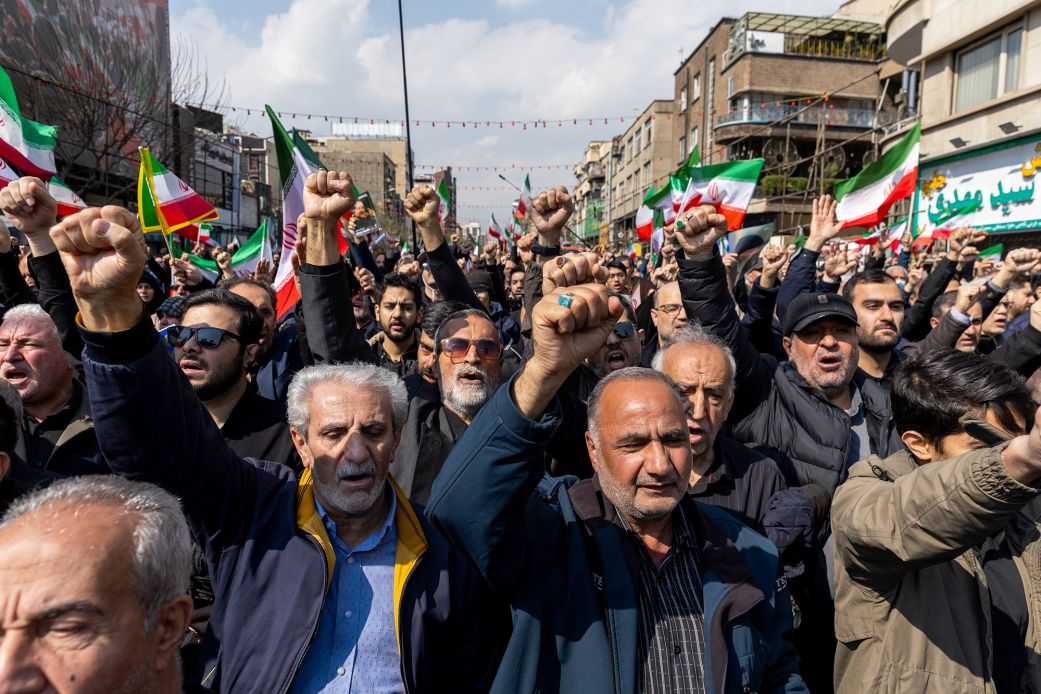
There is also a broader legitimacy issue. Economic decline, unequal development, and repression in minority-heavy provinces can weaken Tehran’s claim to represent a unified national project. That does not necessarily translate into regime change. But it can reduce resilience, increase protest potential, and complicate succession or crisis management. CFR notes that Iran is entering a period of heightened uncertainty around future leadership and internal pressures; those pressures are likely to be felt unevenly across the country.
Even if Iran’s diversity shows where pressure is building, it will be a better strategy not to weaponize that diversity. The more sustainable approach is to use it to identify where repression is concentrated and where targeted, lawful pressure can raise costs on the regime without pushing Iran toward sectarian fragmentation or civil war.
It will be better to use diversity as a lens for pressure, not as a weapon. In practice, that means Washington and Jerusalem can focus on human rights, accountability, targeted sanctions, and information access in places where pressure already accumulates, rather than trying to foment sectarian or ethnic conflict. The UN has reported structural discrimination and disproportionate repression against minorities in Iran, and USCIRF says religious minorities continue to face systematic harassment. That creates a basis for a rights-based strategy, not a carve-up strategy.
First, targeted sanctions on the repressors, not blanket punishment aimed at communities. The US Treasury has continued designating Iranian officials and networks involved in violent repression and sanctions evasion, including security officials tied to crackdowns and major oil-shipping networks that fund the state. That pressures the regime’s coercive and revenue machinery without openly encouraging ethnic fragmentation.
Second, publicly document abuses in minority-heavy regions. Kurdish, Baluch, Sunni, Baha’i, Christian, Jewish, and other communities are already under pressure; making those abuses more visible raises diplomatic and reputational costs for Tehran and makes it harder for the regime to operate in the dark. That is especially relevant because recent UN and USCIRF reporting describes structural discrimination, arbitrary detention, and severe repression against minorities.
Third, support open information flows and civil society, rather than armed proxies. The more outside actors are seen as backing separatists or violent factions, the easier it is for Tehran to frame all dissent as foreign sabotage. Brookings and other analysts note that Iran’s opposition is fragmented already; foreign backing for one ethnic or ideological bloc can deepen those divisions instead of producing durable pressure.
Fourth, pair pressure with humanitarian carve-outs and asylum protections. Broad economic pressure can hit vulnerable communities hardest, especially in poorer and more securitized peripheral provinces. OFAC’s Iran program emphasizes compliance and sector-specific risk, while broader economic reporting shows sanctions and internal dysfunction worsen living conditions. Therefore, a smart policy distinguishes between punishing the regime and squeezing ordinary people.
From a pure strategy standpoint, the U.S. and Israel would get more leverage by exploiting state vulnerabilities than social cleavages by straining the regime’s revenue channels, isolating the IRGC and internal security apparatus, exposing repression in minority areas, keeping communication channels open, and avoiding moves that make Tehran look like the defender of Iranian territorial integrity. Iran’s parliament has already moved harshly against alleged cooperation with Israel, the U.S., or “hostile groups,” and the state regularly uses espionage and separatism narratives to justify crackdowns. External efforts to instrumentalize ethnic or religious differences would likely strengthen exactly that narrative.
The U.S. should define success as stopping attacks on U.S. personnel and partners, reducing the risk of a wider regional war, protecting shipping through Hormuz, and constraining Iran’s nuclear and missile threat. Recent reporting shows the conflict has already widened across the region and is creating major civilian and economic costs. Iran appears to have rejected the current U.S. proposal, but the existence of intermediaries and active proposals means diplomacy is still alive. The U.S. should keep using third-party mediators and focus first on practical steps: no attacks on shipping, no attacks on Gulf infrastructure, no strikes on civilians, and a verifiable pause tied to follow-on talks. U.S. should continue to defend allies and sea lanes, but avoid unnecessary expansion of the war. The U.S. should keep protecting bases, partners, and maritime traffic, because Gulf states are now publicly warning about Iranian strikes on infrastructure and the Hormuz disruption has become a global energy problem. But force posture should be tied to defense and deterrence, not mission creep. As Washington uses sanctions, they should stay focused on the IRGC, weapons networks, shipping deception, and financing channels tied to attacks. That matters even more now because the conflict is already worsening economic stress and civilian suffering. This is not just a U.S.-Iran-Israel issue anymore. Gulf states are directly threatened, and Europe is worried about fuel shortages and shipping disruption. A coordinated U.S.-Gulf-European position would give Washington more leverage than acting alone. The war has disrupted an enormous share of oil and LNG flows through Hormuz, and that is already feeding inflation and slowing business activity. Thus, part of U.S. strategy should be economic containment by stabilizing energy markets, working with allies on supply alternatives, and reducing the domestic inflation hit. Peace negotiations should keep the nuclear issue in the deal structure.